Showing posts with label The Who. Show all posts

Wednesday, 4 March 2015

We are the mods!

                                    We Are The Mods!

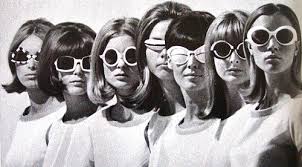
Image result for british mods of the 1960s pictures


Mod culture was born from London's west end underground jazz clubs in the late 1950s.
The name "mod" came as a result from their taste in modernist jazz, this early incarnation of mods had very little impact outside of London.
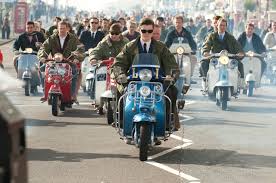
This somewhat group of so called intellectual and elitist mods gave way to the next incarnation of mods, and it's in this second incarnation that the scooter boys on Brighton's beaches can be found! Mod culture, with it's symbols,fashion and music was very much a working class movement. It influenced the masses and infiltrated the high street at every level.
It was all encompassing, and it was very much a product of it's time!
In one of The Daily Mail editions of 1963 it was reported 'to be a mod... is more than a fashion. It is almost a way of life!
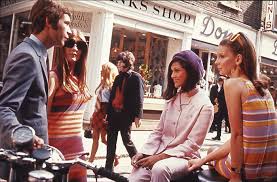
Looking at the mod culture for anyone who likes pop music and pop culture of yesteryear, is a great way to examine the British pop music and youth fashion explosion of the 1960s in general.
Partly as a result of no more military conscription and partly as a result of teenagers having jobs and a little more money to spend!


Image result for british mods of the 1960s pictures


Popular pop television show, Ready, steady, go! that was televised every friday night was clearly aimed at the the "mod" market!
Fashion boutiques across the country benefitted enormously from this with the programs bands, singers, male and female dancers alike wearing mod fashions and the latest styles and look being
freely advertised. Mod culture was changing the face of british life and challenging  politicians who were struggling with the horror of losing cultural control over the youth media with the `onslaught of pirate radio stations such as Radio Caroline and Radio London! Teenagers wanted more air time for their favourite pop groups! The Beatles, The Who, The small faces, The Kinks, The rolling stones ect
And back in the day The BBC only had 1 to 2 hours a day for this massive market! 
The British government of the day fought hard and aggressively to close those stations down.

Mod culture brightened up dreary and finically crushed post war Briton and also with the international success of bands like The Beatles opening the flood gates for other Brit pop outfits sending mod culture all over the world!
The British Taxman had a huge mod smile on His or Her face!
Piagio whom make vespa scooters and lambretta scooters the two most popular brands of motor scooters amongst mods also did very nicely out of the mod explosion! 
My 1996 PX 200 Vespa is a pleasure to ride! Motor bike riders just don't get it! They still feel the need to ride up along side me and the drag me off! As if i don't know a motor 10 times the size of mine has more power...
But hey.... They can't understand can they? It's a way of life!
Image result for british mods of the 1960s pictures


Image result for british mods of the 1960s pictures


Image result for british mods of the 1960s pictures


Wednesday, 6 November 2013

Abbey Road Recording Studio's!!!! PT 1...

                                  Abbey Road Recording Studio' PT 1....

Abbey Road Studios is a recording studio located at 3 Abbey RoadSt John's WoodCity of Westminster, London, England. It was established in November 1931 by the Gramophone Company, a predecessor of British music companyEMI, its present owner. Abbey Road Studios is most notable as being the venue in the 1960s for innovative recording techniques adopted by the BeatlesPink Floydthe HolliesBadfinger and others.Towards the end of 2009, the studio came under threat of sale to property developers. However, the British Government protected the site, granting itEnglish Heritage Grade II listed status in 2010, thereby preventing the building from any major alterations. Originally a nine-bedroom Georgian townhouse built in the 1830s on the footpath leading to Kilburn Abbey, the building was later converted to apartments where the most flamboyant resident was Maundy Gregory. The premises were acquired by theGramophone Company in 1931 and converted into studios. Pathé filmed the opening of the studios, when Sir Edward Elgar conducted the London Symphony Orchestra in recording sessions of his music. The neighbouring house is also owned by the studio and used to house musicians. During the mid-20th century the studio was extensively used by leading British conductor Sir Malcolm Sargent, whose house was just around the corner from the studio building.

It was not until 1970 that the name Abbey Road Studios became official. The Gramophone Company amalgamated with Columbia Graphophone Company to formEMI, which took over the studios and dubbed them EMI Studios. It was under this name that in 1936 cellist Pablo Casals became the first to record Johann Sebastian Bach's Cello Suites No. 1 & 2 at the behest of EMI head Fred Gaisberg. The recordings went on to spur a revolution amongst Bach aficionados and cellists alike.

Studio Two at Abbey Road became a centre of rock music in 1958 when Cliff Richard and the Drifters (later Cliff Richard and The Shadows) recorded "Move It" there.

http://www.theoompahroundabout.com/


Tuesday, 29 October 2013

VOX Amplifiers PT 1......

                                                                    VOX Amplifiers PT1....

Beginnings[edit]

The Jennings Organ Company was founded by Thomas Walter Jennings in Dartford Kent, England after World War II. Jennings's first successful product was the Univox, an early self-powered electronic keyboard similar to the Clavioline.

In 1956 Jennings was shown a prototype guitar amplifier made by Dick Denney, a big band guitarist and an old workmate from World War II. The company was renamed Jennings Musical Industries, or JMI, and in 1958 the 15-watt Vox AC15 amplifier was launched. It was successful, popularized by The Shadows and other British rock 'n' roll musicians.

The AC30  Main article: Vox AC30

The Vox AC30 amplifier

In 1959, with sales under pressure from the more powerful Fender Twin and from The Shadows, who requested amplifiers with more power, Vox produced what was essentially a double-powered AC15 and named it the AC30. The AC30, fitted withalnico magnet-equipped Celestion "blue" loudspeakers and later Vox's special "Top Boost" circuitry, and like the AC15 utilizing valves (known in the US as tubes), helped to produce the sound of the British Invasion, being used by The BeatlesThe Rolling StonesThe Kinks and the Yardbirds, among others. AC30s were later used by Brian May of Queen (who is known for having a wall of AC30s on stage), Paul Weller ofThe Jam (who also assembled a wall of AC30s), Rory GallagherThe Edge of U2and Radiohead guitarists Thom YorkeJonny Greenwood and Ed O'Brien. The Vox AC30 has been used by many other artists including Mark KnopflerHank Marvinwho was instrumental in getting the AC30 made, Pete TownshendRitchie BlackmoreJohn ScofieldSnowy WhiteWill SergeantTom PettyMike Campbell,Peter BuckJustin HaywardMike NesmithPeter TorkNoel GallagherMatthew BellamyOmar Rodriguez-LopezDustin Kensrue, and many others.


Adrian Howe from The Oompah Roundabouts Amps! On the left a newer VOX AD50DT! And on the right a classic VOX AC30 with twin Celestion speakers! 

Friday, 4 October 2013

The Who !!! PT 1!!!

                                                The Who PT 1 !!!

The Who are an English rock band formed in 1964. The best known line-up consisted of singer Roger Daltrey, guitarist Pete Townshend, bassist John Entwistle, and drummerKeith Moon. For much of their career they have been regarded as one of the three most important British rock acts along with The Beatles and The Rolling Stones.[1]

The band developed from an earlier group, The Detours, before stabilizing around a line-up of Daltrey, Townshend, Entwistle and Moon. After releasing a single (billed as The High Numbers), the group established themselves as part of the mod movement, specialising in auto-destructive art by destroying guitars and drums onstage. The group achieved national attention in Britain after support by pirate radio and television, with their first single (as The Who), "I Can't Explain" reaching the top ten, and achieved a number of further hit singles including "My Generation", "Substitute" and "Happy Jack". Although initially regarded as a singles act, they also found success with the albums My Generation and A Quick One. The group achieved success in the US after performing at the Monterey Pop Festival in 1967, and the top ten single "I Can See for Miles". They released The Who Sell Out at the end of the year, and spent much of the following one touring the US.

The release of their fourth album, Tommy, in 1969 was a major commercial and critical achievement, and subsequent live appearances at Woodstock and the Isle of Wight Festival, along with the live album Live At Leeds transformed The Who's reputation from a hit-singles band into a critically acclaimed rock act. The success brought pressure on lead songwriter Townshend, and the follow-up to TommyLifehouse was abandoned in favour of 1971's Who's Next. The group subsequently released Quadrophenia (1973) and The Who by Numbers (1975), oversaw a film of Tommy and toured to large audiences before retiring from most live performances in 1977. The release of Who Are You in 1978 was overshadowed a few weeks later by the death of Moon on 7 September, at the age of 32.

Kenney Jones, formerly of The Small Faces and The Faces, replaced Moon and the group resumed touring. A film of Quadrophenia was released in 1979 along with the retrospective documentary The Kids Are Alright. The group continued recording, releasing Face Dances in 1981 and It's Hard the following year, before breaking up. They occasionally re-formed for live appearances such as Live Aid in 1985, a 25th anniversary tour in 1989 that drew mixed reviews, and for a tour of Quadrophenia in 1996. The Who resumed regular touring in 1999, with drummer Zak Starkey, to a positive response, and were considering the possibility of a new album, but these plans were stalled by Entwistle's death in June 2002 at the age of 57. Townshend and Daltrey elected to continue as The Who, releasing Endless Wire (2006), which reached the top ten in the UK and US. The group continue to play live on a regular basis, and in 2012 they began a further tour of Quadrophenia


Tuesday, 6 August 2013

The Oompah Roundabouts First Single is Out!


Yes we have a song out at last! Its called The Wibble Wobble! A catchy Guitar Pop/Rock song! Recorded here at gap central Recording studio! Remixed and mastered in the USA at the waveshop! Its currently available for down load at cdbaby.com and itunes! with more sites to follow. We have just finished filming the video for The Wibble Wobble! Haven't laughed so much in a long time! The clip should be on utube by the end of the week. To all our new fans that have already bought our record, Thanks so much! more singles to follow and then the album to follow them! Age is no barrier! After all, It's only rock and roll Groovers!!! :)
Taken at the video shoot! Im the chunky pie eater! Mike Windy Craigmile is the Drumming mad man! (I'm sure Keith Moon has possessed him)
No !! its just a smoke machine!
Pics of our set we created under my back patio just out side of gap central control room! 
We be very happy with our first attempt at making a music video! Its a bit crazy but IN NO WAY BORING! 
A FEW SIMPLE PROPS 


love these shots! 
The Oompah Roundabout are Hormone in the black And Windy in the brown!