Showing posts with label Brian Epstein. Show all posts

Sunday, 16 August 2015

Cilla Black. Pt 1.

  Cilla Black. Pt 1.

Priscilla Maria Veronica White,
                                                   Born on the 27 of may 1943 was known by her performance name
Cilla Black,  firstly an english pop singer, then actress and entertainer.
Championed by her good friends The Beatles, and signed to NEMS Enterprises under the wing of
the Beatles manager  Brian Epstein.
Her professional singing career started in 1963. Brian Epstein introduced Cilla Black to  George Martin who signed her to  Parlophone Records and produced her first single, a track written by
Lennon and McCartney "Love of the Loved" which was released only three weeks after she joined
Brian Epstein. Reaching a modest No. 35 in the UK.


Cilla Black's second single, released at the beginning of 1964, was a cover of the Burt BacharachHal David composition "Anyone Who Had a Heart", which had been written for Dionne Warwick. The single beat Warwick's recording into the UK charts and rose to No. 1 in Britain in February 1964 (spending three weeks there), selling 800,000 UK copies in the process. Her second UK No. 1 success, "You're My World", was an English-language rendition of the Italian popular song "Il Mio Mondo" by composer Umberto Bindi. She also enjoyed chart success with the song in AustraliaNew ZealandEuropeSouth Africa and Canada. Both songs sold over one million copies worldwide, and were awarded gold discs.
Cilla Black's two No. 1 successes were followed by the release of another Lennon–McCartney composition, "It's for You", as her fourth UK single. Paul McCartney played piano at the recording session and the song proved to be another success for Black, peaking at No. 7 on the UK charts.
Cilla Black belonged to a generation of British female singers which included Dusty SpringfieldHelen ShapiroPetula ClarkSandie Shaw and Lulu. These artists (other than Petula Clark) were not singer-songwriters but interpreters of 1960s contemporary popular music by song writers and producers.Cilla Black recorded much material during this time, including songs written by Phil SpectorRandy NewmanTim Hardin and Burt Bacharach. All were produced by George Martin at Abbey Road Studios.
              Brian Epstein and Cilla Black.

              The Single Alfie by Cilla Black.

                                            Cilla Black

                                 Cilla Black.

                                                  Cilla Black.

      Paul McCartney and John Lennon.                            Cilla Black.


Thursday, 5 December 2013

The Beatles and Vox!

                                                              The Beatles and Vox!
Back in early 1962 the band were little more than local heroes, returning back from honing their live performance skills playing night after night in Hamburg for over two years. Soon after they were dazzling punters in Liverpool’s famous Cavern Club with their new songs and incendiary live shows. Up until that point, Paul McCartney and the rest of the group used any gear they could scrape together. It was not until The Beatles were taken under the wing of manager Brian Epstein that they truly begin to hone not just their image but also their live sound. Unheard of in those times, the maverick Epstein quickly managed to strike up an endorsement deal with a small amp company out of Dartford that would come to define the sound of the British Invasion.
In a time when highly desired American brands were rarely imported to the UK, local manufacturers recognised a demand to create their own line of instruments and amplifiers to supply the burgeoning Rock and Pop explosion on the British side of the pond. Back in the early 1960’s VOX was a relatively fresh brand and new to the scene, though known and desired in the UK amongst aspiring guitarists due to emerging guitar hero Hank Marvin of The Shadows. Around the time The Beatles were signed by George Martin’s Parlophone label in 1962, Brian Epstein signed an endorsement deal with VOX for the band to exclusively use VOX gear in their backline. Soon the band started using a combination of VOX AC15 and AC30 amps. Throughout their live career and the majority of their time in the studio, VOX would go on to supply a variety of different amps and equipment to the band. The group pushed VOX engineers to expand the boundaries of their designs with their ever-increasing requirements for more volume and headroom. If you ever had the opportunity to see the Beatles, chances are you were hearing Paul McCartney and the rest of the lads play through VOX gear. From the sweaty gigs in the clubs of the North of England to the Ed Sullivan Show & defining Shea Stadium gig, when you heard The Beatles, you heard VOX. The timeless British VOX tone is there in all of its grandeur in those classic early recordings.

THE EARLY DAYS

In the early days the band plugged straight into AC30s and as a result it is the amplifier most identified with the British invasion and early Beatles sound. In late 1962 Paul transitioned to the all-new VOX T-60 bass amp, which was one of the world’s first musical transistor amplifiers (did not need valves/tubes). George and Johns AC30s were soon modified to sport the new 'top-boost' unit, which enabled the band to drive the amps harder for a more cutting and saturated tone. Pushing his T-60 harder and harder night after night, Paul eventually replaced it in favour of an AC30 head and a new vertical bass cabinet loaded with combo of 12 & 15 inch Celestion speakers. As the Beatles started acclimating themselves to the recording studio, much of the character of those early records came from George Martin’s approach to capturing the band playing live in the room through their VOX amps with minimal overdubs, The opening riff of 'Day Tripper', the jangly intro to 'I Feel Fine' and the raucous rhythm to 'All My Loving' all provide great examples of the classic 1960’s VOX tone, not to mention the genius of Lennon and McCartney’s songwriting.

THE BEATLES RISE TO STARDOM

As The Beatles rose to stardom it was clear that they were going to need even more power to be heard over the deafening screams of crazed teenage fans going to their shows in even greater numbers. In the days before the modern multi channel high-powered PA systems taken for granted today, VOX would again have to answer the band’s call for more volume with more powerful amps. VOX’s answer was to construct a single channel 50 watt head which would be paired with a 'closed back' 2 x 12" speaker cabinet. These cabinets also uniquely featured an additional Midax Horn to accentuate the high frequencies. In development since late 1963, VOX further beefed up the head design to 80 watts with the AC80/100. This powerful new head, coupled with larger speaker cabinets provided more power and projection onstage. The increase in power proved to be a revelation for Paul who quickly upgraded to the AC100 head and had VOX construct a vertical 2 x 15" closed back bass cabinet. Paul’s bass lines would now have more presence and was a great partner for his Hofner 'Violin' Bass. As demand for the band increased it saw their performances move away from medium sized gigs to concert halls, outdoor shows and eventually stadiums. From late 1964 the entire band would all eventually adopt AC100’s for maximum headroom and power on stage. The band found however that the weak PA systems of the time simply could not match the increasingly deafening screams directed at them by thousands of adoring fans. Tired of the incessant touring and frequently complaining of the inability to hear themselves on stage they eventually made the decision to stop touring and focus on work in the studio after their final public show at San Francisco’s Candlestick Park in 1966.


Sunday, 24 November 2013

Gerry and the Pacemakers, Pt1...

                                            Gerry and the Pacemakers, Pt1...

Gerry Marsden formed the group in 1959 with his brother, Fred, Les Chadwick and Arthur McMahon. They rivalled the Beatles early in their career, playing in the same areas of HamburgGermany and Liverpool. McMahon (known as Arthur Mack) was replaced on piano by Les Maguire around 1961.They are known to have rehearsed atCammell Laird shipping yard at Birkenhead. The group's original name was Gerry Marsden and the Mars Bars, but they were forced to change this, when the Mars Company, producers of the chocolate Mars Bar, complained. 

The band was the second to sign with Brian Epstein, who later signed them withColumbia Records (a sister label to the Beatles' label Parlophone under EMI). They began recording in early 1963 with "How Do You Do It?", a song written by Mitch Murray, that Adam Faith had turned down and one that the Beatles chose not to release (they did record the song but insisted on releasing their own song, "Please Please Me"). The song was produced by George Martin and became a number one hit in the UK, the first by an Epstein Liverpool group to achieve this on all charts, until being replaced at the top by "From Me to You", the Beatles' third single. 

Gerry and the Pacemakers' next two singles, Murray's "I Like It" and Rodgers and Hammerstein's "You'll Never Walk Alone", both also reached number one in the UK Singles Chart,  the latter recorded instead of the Beatles' "Hello Little Girl", which went on to become the first hit for the Fourmost. "You'll Never Walk Alone" had been a favourite of Gerry Marsden's since seeing Carouselgrowing up. It soon became the signature tune of Liverpool Football Club and Celtic Football Club. To this day, the song remains a football anthem, there and elsewhere, inspired by Gerry Marsden's rendition rather than the Broadway original. 

The group's New York arrival in 1964.

Despite this early success, Gerry and the Pacemakers never had another number one single in the UK. Gerry Marsden began writing most of their own songs, including "It's Gonna Be All Right", "I'm the One", and "Ferry Cross the Mersey", as well as their first and biggest US hit, "Don't Let the Sun Catch You Crying", which peaked at No.4, and which Gerry Marsden initially gave to Decca recording artist Louise Cordet in 1963. She recorded the song (Decca F11824), but without commercial success. The song, written by all bandmembers, has also been covered by Les Carle, the LettermenJackie DeShannon (This Is Jackie DeShannon album, 1965), José FelicianoDr. JohnRickie Lee JonesGloria Estefan (Hold Me, Thrill Me, Kiss Me album) among others.

They also starred in an early 1965 film called Ferry Cross the Mersey (sometimes referred to as "Gerry and the Pacemakers' version of A Hard Day's Night"), for which Marsden wrote much of the soundtrack.  The title song was revived in 1989 as a charity single for an appeal in response to the Hillsborough football crowd disaster, giving Marsden – in association with other Liverpool stars, including Paul McCartney and Frankie Goes to Hollywood's Holly Johnson – another British number one.

In the US, their recordings were released by the small New York City record label Laurie in 1963, with whom they issued four singles during 1963 without success (as listed below). When the Beatles broke through in January 1964, Laurie's next regular single release of "Don't Let the Sun Catch You Crying" became a big hit and during 1964 Laurie coupled "How Do You Do It?" with "You'll Never Walk Alone" (Laurie 3261) and "I Like It" with "Jambalaya" (Laurie 3271) with some success.

By late 1965, their popularity was rapidly declining on both sides of the Atlantic. They disbanded in October 1966, with much of their latter recorded material never released in the UK.

Drummer Freddie Marsden, born Fredrick John Marsden, 23 November 1940, at 8 Menzies Street, Toxteth, Liverpool, died on 9 December 2006 in Southport, age 66.


Monday, 7 October 2013

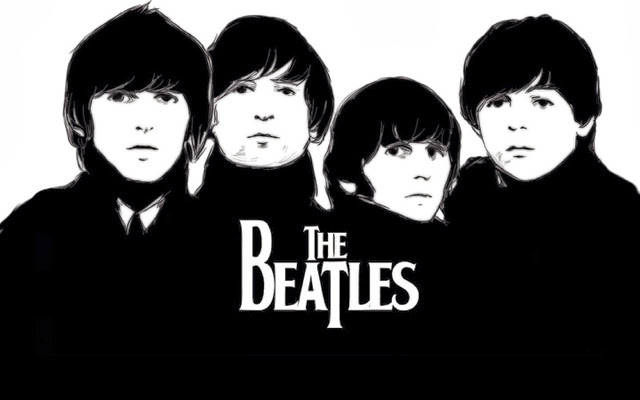
The Beatles, PT 1....

                                                         The Beatles, PT 1........
The Beatles
A square quartered into four head shots of young men with moptop haircuts. All four wear white shirts and dark coats.
The Beatles in 1964
Top: Lennon, McCartney
Bottom: Harrison, Starr
Background information
OriginLiverpool, England
GenresRockpop
Years active1960–70
LabelsParlophoneSwanVee-Jay,CapitolUnited ArtistsApple
Associated actsThe QuarrymenBilly Preston,Plastic Ono Band
Websitethebeatles.com
Past members

The Beatles were an English rock band formed in Liverpool in 1960. Their best-known lineup, consisting of John LennonPaul McCartneyGeorge Harrison, and Ringo Starr, became considered by many as the greatest and most influential act of the rock era.[1]Rooted in skiffle and 1950s rock and roll, the Beatles later utilized several genres, ranging from pop ballads to psychedelic rock, often incorporating classical elements in innovative ways. In the early 1960s, their enormous popularity first emerged as "Beatlemania", but as their songwriting grew in sophistication, they came to be perceived by fans and cultural observers as an embodiment of the ideals shared by the era's sociocultural revolutions.

Starting in 1960, the Beatles built their reputation playing clubs in Liverpool and Hamburgover a three-year period. Manager Brian Epstein moulded them into a professional act and producer George Martin enhanced their musical potential. They gained popularity in the United Kingdom after their first modest hit, "Love Me Do", in late 1962. They acquired the nickname the "Fab Four" as Beatlemania grew in Britain over the following year, and by early 1964 they had become international stars, leading the "British Invasion" of the United States pop market. From 1965 on, the Beatles produced what many critics consider their finest material, including the innovative and widely influential albums Rubber Soul (1965),Revolver (1966), Sgt Pepper's Lonely Hearts Club Band (1967), The Beatles (1968), andAbbey Road (1969). After their break-up in 1970, they each enjoyed successful musical careers. Lennon was shot and killed in December 1980, and Harrison died of lung cancer in November 2001. McCartney and Starr remain musically active.

According to the RIAA, the Beatles are the best-selling band in the United States, with 177 million certified units. They have had more number-one albums on the British charts and sold more singles in the UK than any other act. In 2008, the group topped Billboardmagazine's list of the all-time most successful "Hot 100" artists. As of 2013, they hold the record for most number-one hits on the Hot 100 chart with 20. They have received 7Grammy Awards, an Academy Award for Best Original Song Score and 15 Ivor Novello Awards. Collectively included in Time magazine's compilation of the 20th century's 100 most influential people, the Beatles are the best-selling band in history, with EMI Recordsestimating sales of over one billion units. In 2004, Rolling Stone ranked the Beatles as the best artist of all-time.